
November 20, 2026
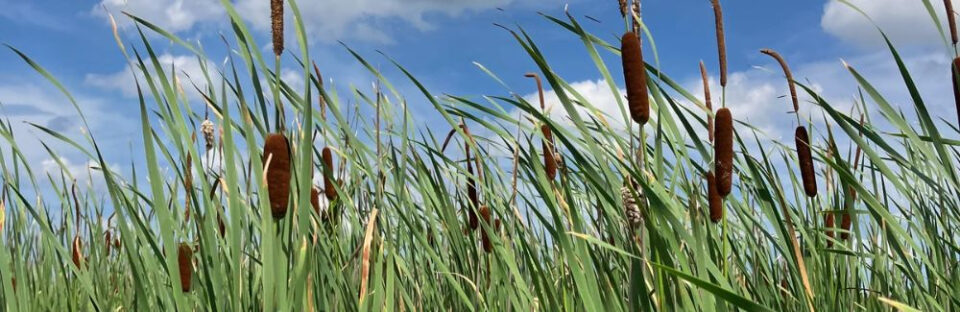
PIE researchers Ilana Stein and Zoe Cardon’s new publication in New Phytologist identified that cattail roots leak the most oxygen when the roots are actively growing, both day and night.
Cattails are a familiar sight in wetlands, where they thrive in both brackish and freshwater marshes. But surviving in waterlogged soil presents a challenge; their roots need oxygen in an environment where very little is available.
Cattails have evolved a solution. Air-filled tubes, called aerenchyma, act like tiny snorkels, carrying oxygen from the above-ground plant down to its roots.
Some of the oxygen, however, escapes from the roots into the surrounding sediment. That leakage can have important consequences for marsh ecosystems, influencing the microbial communities responsible for carbon cycling and methane emissions in the marsh.
It’s a delicate balance. Oxygen helps keep cattail roots alive and growing, supporting the buildup of the sediment platform that allows marshes to keep pace with rising sea levels. At the same time, oxygen leaking from the roots into the sediment has the potential to accelerate microbial decomposition of organic carbon, negatively impacting the marshes’ potential to store carbon.
Until recently, scientists didn’t know what conditions caused cattails to release the most oxygen into the surrounding sediment, though in other plants, often the loss is strongest during daytime. Now, in a recent paper published in New Phytologist, scientists from the Marine Biological Laboratory (MBL), Ilana Stein and Zoe Cardon, have identified that the largest oxygen leaks occur when the cattail roots are actively growing, both day and night.
Continue reading on MBL.edu.